

As we stare down the barrel of a second wave of school closures, we know one thing for certain: There’s no going around parents. Teachers must work with them and through them, or children will fall further behind with every passing day.
The bad news? Most teachers and parents are ill-prepared to collaborate. This became painfully apparent last spring. The good news? There is a simple process through which educators and families can team up to help kids reach learning goals. Family-Educator Learning Accelerators — FELAs — are five- to 10-week cycles during which teachers and families share a game plan to help kids reach learning goals. They have six essential steps:
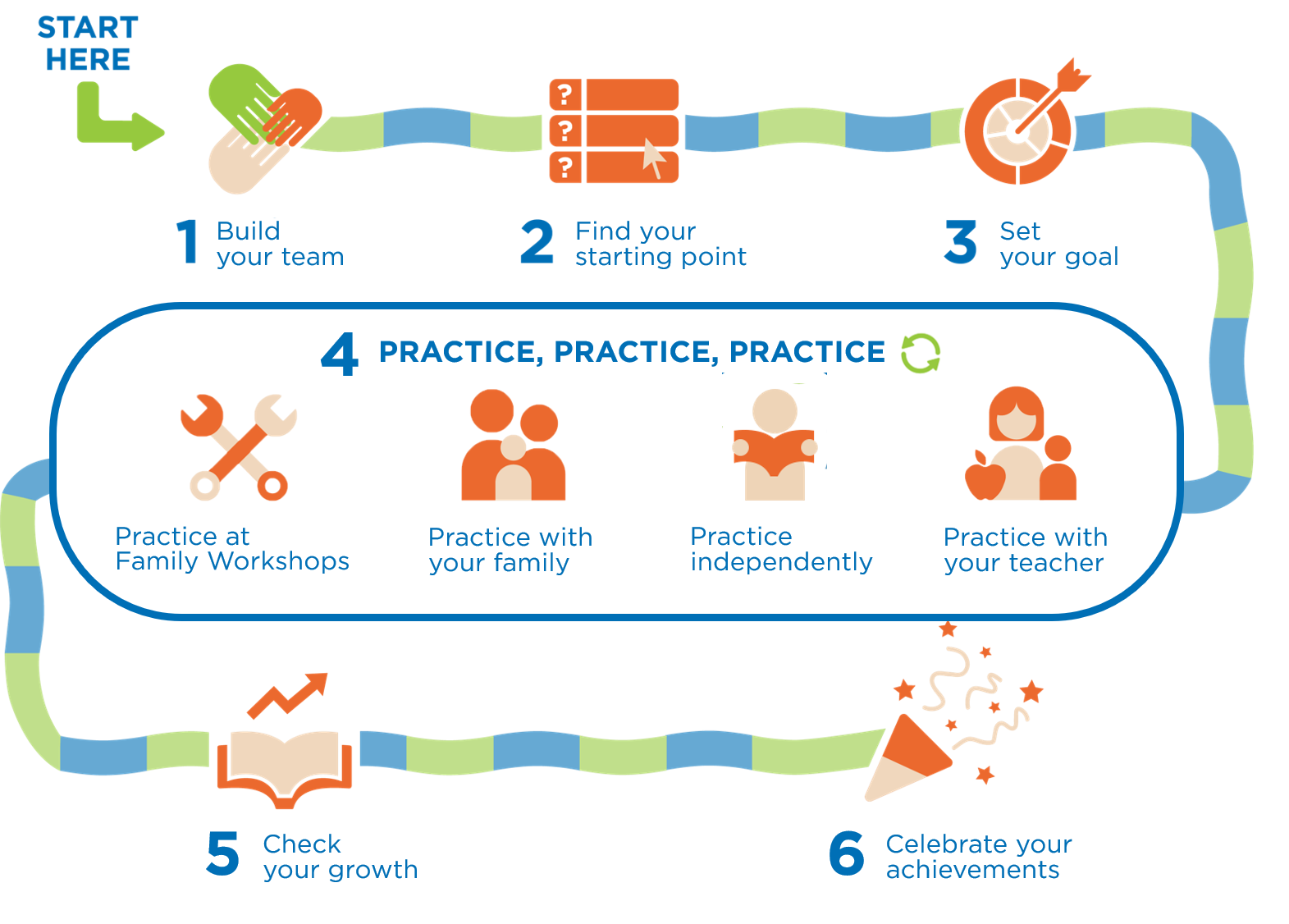
1. Build a team
Each team consists of a teacher, student and family member. Teachers typically initiate a learning accelerator, working with 10 to 15 students in need of academic support. Home visits (in person or virtual) are perhaps the most effective—and cost effective — way to build relational trust and form a team.
2. Find your starting point
It’s important to determine where a student is starting in order to set an ambitious but achievable growth goal. Many teachers use their school’s assessment tools to get a baseline.
3. Set a goal
Goals are the fuel. They should be quantitative — moving students from one level to the next — and achievable within five to 10 weeks. Less than five weeks isn’t quite long enough to build a habit; longer than 10 weeks sets the finish line too far away to drive behavior change. You need to see the light at the end of the tunnel to march through it. In pursuit of their goals, students, families and teachers practice, practice again and practice some more…
4. Practice, practice, practice
a. Practice at workshops: Parents and teachers must practice together at least four times to share skills and create mutual accountability. These whole-group workshops can take place in person or virtually.
b. Practice with families: At home, children should practice daily for at least 15 minutes. An analysis of nearly 10 million students found that 15 minutes seems to be the magic number for substantial positive gains in reading achievement.
c. Practice with teachers: Students must also practice with their teachers on a weekly, if not daily, basis.
5. Check your growth
At the end of the cycle, teachers (and/or parents) readminister the assessment to measure each student’s progress relative to their goal.
6. Celebrate your achievements
The cycle concludes with a celebration. Experiencing a quick win helps kids, families and teachers crystalize lasting habits. Surveys of students show that more than six months after each cycle has ended, families are still practicing at home every bit as much, every bit as often. Short goal-setting cycles are more akin to interval training than marathon running. Small wins lead to big wins and lasting behavior change.
FELAs offer teachers and families a fruitful and sustainable way to accelerate children’s learning. Springboard Collaborative, a nonprofit that has spent the last decade helping Title I schools implement the FELA method in literacy, has found that students average a three- to four-month reading gain during each cycle, closing the gap with grade-level performance by more than half. A recent external evaluation shows that the largest gains were for students who started below grade level.
Even with schools closed, families participating in learning accelerators have been averaging 26 minutes of daily reading at home. That’s an increase of four daily minutes from pre-COVID numbers, our literacy app shows. Across D.C. Public Schools, for example, virtual family workshops averaged an impressive 99 percent parent attendance rate. Students in these families read an average of 101 books in just five weeks.
Despite all the challenges of the digital divide, families are rising to the occasion of teaching at home. Now, schools must rise to the occasion of helping parents sharpen their instructional skills. This is especially true in low-income communities, where COVID-19 is disproportionately taking a toll. In a recent survey of low-income families and families of color, parents say they’re more worried about their children’s learning than even their ability to pay the bills. And parents’ single biggest unmet need is “personalized guidance to support learning at home.” Marginalized families are demanding help, and FELAs offer a structure through which teachers can answer the call.
If there’s a silver lining in how the pandemic brought schools to a grinding halt, it’s that we have a once-in-a-lifetime opportunity to reinvent education in America. Let’s not create the digital clone of a system that didn’t work in the first place. We can leverage families as assets or reproduce decades of failure and inequity. Let’s not leave it to chance.
Originally posted as an opinion piece in The 74.